


Wild Animals – Introduction Lesson
1. Introduction
Revision
Start the lesson by revisiting the previous topic. Use a simple and engaging method—such as a song, short game, video, story, or joke—to help students recall what they learned last time and transition into today’s lesson.
Introduction
Introduce the new vocabulary and topic with an engaging starter. Choose something age-appropriate and fun: a song, short video, story, or active game will help students connect quickly with the new material.
Lesson Starters:
Video
Wild Animals for Kids
A video introducing jungle animals, along with the bear and the wolf. At the end, there is a revision section, which can be skipped the first time you watch.
Total duration: 4:08
Song(s)
Let’s Go To The Zoo
A rhythmic and energetic song where students can stomp like an elephant, hop like a kangaroo, and swim like a polar bear while singing along.
Duration: 4:08
Books
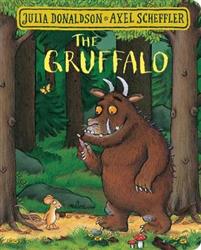
The Gruffalo by Julia Donaldson
*Buy now
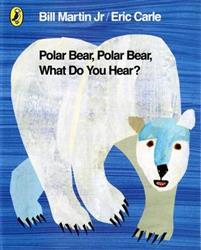
Polar Bear, Polar Bear, What Do You See? by Bill Martin
*Buy now
2. Study – Learning the Vocabulary
Look at, listen to, and repeat the new words together. Encourage students to say each word out loud several times to build confidence. Make it more fun by varying how the words are spoken—loudly, quietly, slowly, quickly, happily, or in silly voices. Let students suggest their own creative styles.
Use the PowerPoint or flashcards provided on the right-hand side of the page to support visual learning.
Words of the Week:
- monkey
- elephant
- giraffe
- tiger
- lion
- snake
- whale
- shark
- penguin
- bear
- owl
- fox
3. Activities
Pick one or two printable activities from the right-hand side. These could be interactive games or simple worksheets, depending on the energy level and focus of your class.
You’ll also find the word set available on Quizlet for additional digital practice.
Additional Activity Ideas:
Animal Walk
- The teacher calls out the name of an animal in English.
- Students must move like that animal, for example, slither like a snake or stomp like an elephant.
- You can also play music in the background and have the students move to the rhythm as their chosen animals.
Feel and Guess
- Place one plastic toy animal in a bag at a time.
Students take turns holding the bag and trying to guess the animal by touch.
If needed, you can cover their eyes with a scarf to make it more exciting. - When guessing, the student says:
“Is it a/an …?” - For extra fun, add one dinosaur to the bag — the students will love the surprise!
Tiger, Monkey and Elephant
- Use the words TIGER, MONKEY, and ELEPHANT. Students stand in a circle, and the teacher (or leader) stands in the middle.
- The leader points to one student and says the name of an animal.
The chosen student acts out the movement of that animal, while the two students next to them perform a different related movement. - Then the leader points to another student and says a different animal name.
Movements:
TIGER: The pointed-at / student in the middle shows claws; the students on each side crouch in a stalking pose.
MONKEY: The pointed-at / student in the middle scratches their head with one hand and their tummy with the other; the students on each side pretend to pick fleas off the monkey.
ELEPHANT: The pointed-at / student in the middle makes a trunk with one arm; the students on each side spread their arms wide to show big elephant ears.
With younger students, start with only one or two animals.
Students can also create their own movements for new animals later on.
4. Wrap-up
Choose a key point from the lesson that you want to highlight to the students. It might be:
- something the students did especially well — take a moment to thank and praise them
- revisiting the vocabulary using the PowerPoint presentation or flashcards (images only)
- completing a worksheet
- giving a small homework task (e.g. teach 2–3 words to someone in your family)
- repeating the lesson starter song, game, video, or story