


Action Words – Introduction Lesson
1. Introduction
Revision
Start the lesson by revisiting the previous topic. Use a simple and engaging method—such as a song, short game, video, story, or joke—to help students recall what they learned last time and transition into today’s lesson.
Introduction
Introduce the new vocabulary and topic with an engaging starter. Choose something age-appropriate and fun: a song, short video, story, or active game will help students connect quickly with the new material.
Lesson Starters:
Song(s)
Jump, Run and Shout!
Have your students jump, run, walk, and stop while singing this energetic song.
Duration: 3:20
Books

Pete the Cat: Rocking in My School Shoes by James Dean
*Buy now
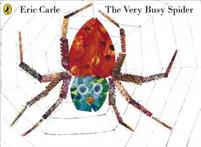
The Very Busy Spider by Eric Carle
*Buy now
2. Study – Learning the Vocabulary
Look at, listen to, and repeat the new words together. Encourage students to say each word out loud several times to build confidence. Make it more fun by varying how the words are spoken—loudly, quietly, slowly, quickly, happily, or in silly voices. Let students suggest their own creative styles.
Use the PowerPoint or flashcards provided on the right-hand side of the page to support visual learning.
Words of the Week:
- sit
- stand
- walk
- run
- listen
- look
- eat
- drink
- jump
- play
- read
- sing
3. Activities
Pick one or two printable activities from the right-hand side. These could be interactive games or simple worksheets, depending on the energy level and focus of your class.
You’ll also find the word set available on Quizlet for additional digital practice.
Additional Activity Ideas:
Simon Says
- A student or the teacher gives instructions, for example:
“Simon says, walk!” — everyone must walk. - Players must follow all commands that begin with the words “Simon says.”
If the teacher or student says, “Jump!” without saying “Simon says” first, the players must not jump. - If someone performs the action by mistake, that player is out (or follows the agreed-upon rule for errors).
The winner is the player who makes the fewest mistakes and stays in the game the longest. - This game can also be played in small groups.
Yes!
- Together, come up with movements or actions for words such as sing, walk, jump, sit, and clap.
- Play in pairs or with the whole class.
One student (the caller) stands in front of the class and gives a command, for example:
“Let’s walk!” — everyone starts walking. - Another student replies:
“Yes, let’s walk and dance!”
Then everyone performs both actions — walk and dance. - After a few rounds, change the caller so everyone gets a turn.
Pantomime
- Form groups of 3–4 students.
Assign 4–5 action words to each group, or let the students choose their own.
Do not reveal the words to the other groups. - Each group prepares a short performance where they pantomime (act without speaking) their assigned words.
- The group performs twice for the others:
- During the first round, no one is allowed to speak or guess.
- In the second round, the other students can guess the action words as the group performs.
Sally Says
This is an inverse version of Simon Says. However, Sally must always be obeyed!
The phrase “Sally says” is used every time before an action word.
In this version, students must do the opposite of what Sally says.
For example, if the action words are stop–run, stand–sit, jump-walk, and clap:
-
When Sally says “Clap!”, everyone claps.
-
When Sally says “Stop!”, everyone runs.
-
When Sally says “Stand!”, everyone sits.
Make sure your students feel comfortable and confident before starting the game.
Begin with just a few actions and add more as they improve.
4. Wrap-up
Choose a key point from the lesson that you want to highlight to the students. It might be:
- something the students did especially well — take a moment to thank and praise them
- revisiting the vocabulary using the PowerPoint presentation or flashcards (images only)
- completing a worksheet
- giving a small homework task (e.g. teach 2–3 words to someone in your family)
- repeating the lesson starter song, game, video, or story